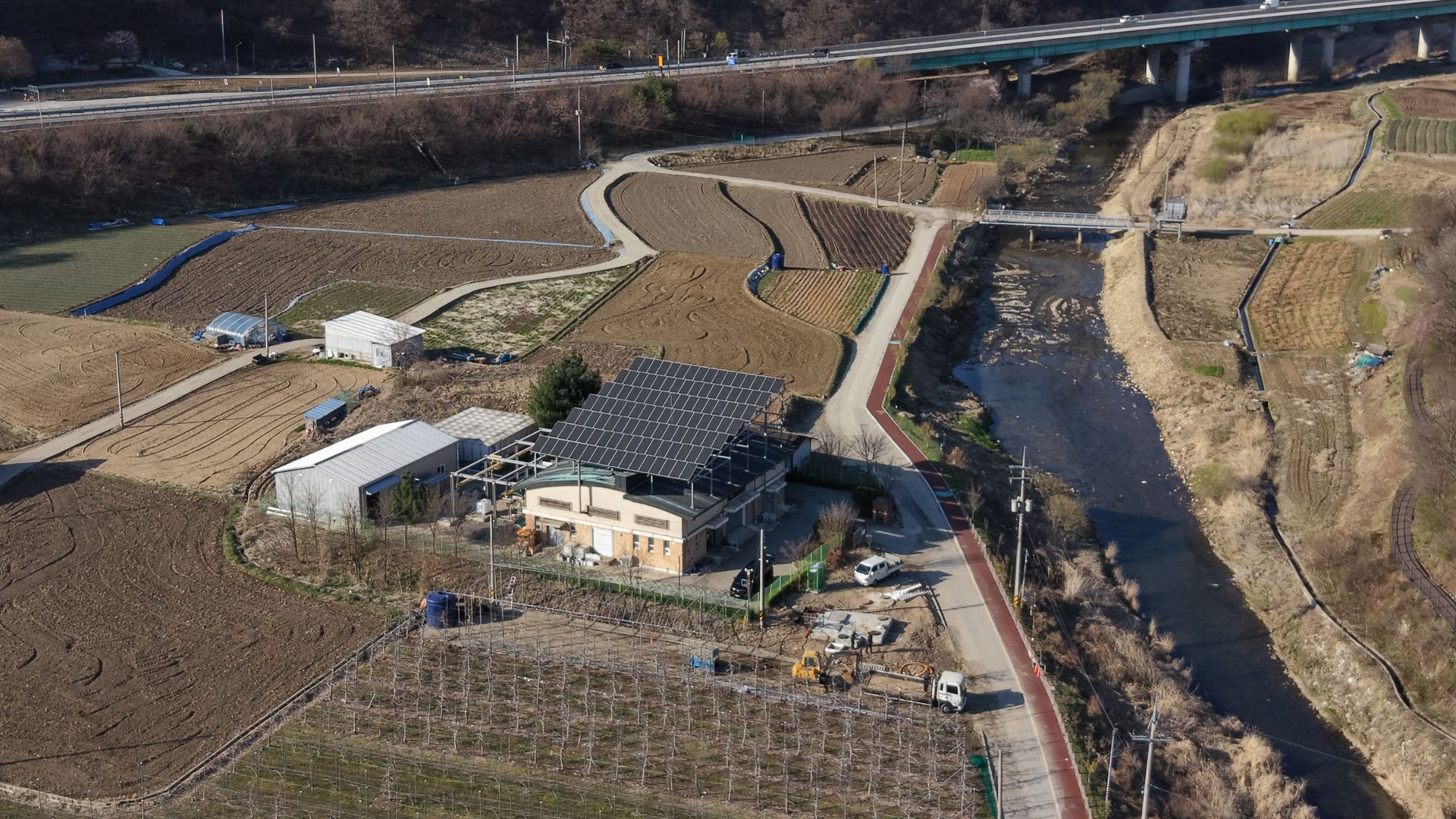
Cyprus · agricultural solar
Agricultural solar in Cyprus.Compare several quotes at once.
Agricultural solar is sized from the irrigation calendar backwards. A Cypriot holding draws its heaviest electrical load in the months of strongest generation, which is the most favourable coincidence in the whole of Cypriot solar — and the reason the specification questions here are about land, connection and soiling rather than about panels.
- Technical specification first
- Regulatory sequence documented
- Installer credentials verified
Agricultural solar companies in Cyprus
The load profile is the specification
An agricultural installation is designed from consumption rather than from roof area, and on a Cypriot holding the consumption has a distinctive shape.
Irrigation dominates. Pumping — from a borehole, from a reservoir, into a pressurised network — draws heavily and draws seasonally, concentrating into the months when crops need water and rain does not fall. Those are the same months in which a photovoltaic array produces most. Few load profiles anywhere align with generation as closely.
Around that sit smaller and steadier loads: cold storage where produce is held, packhouse equipment during harvest, ventilation and lighting in livestock buildings, and the office and domestic load of the holding itself. Cold storage in particular runs when the ambient is hottest, which pushes in the same direction.
The design question is what proportion of generation is consumed on site rather than exported. Self-consumed energy displaces electricity at the price the holding pays for it. Exported energy earns whatever the export arrangement provides. The gap between those two values is why sizing follows the consumption curve rather than the available area, and why an array matched to a large irrigation load performs differently in the accounts from an identically sized array on a holding that irrigates little.
A meaningful assessment starts with metered consumption across a full year, by month at minimum and by half-hour where the data exists. An installer sizing from an annual total alone is estimating the shape of the year rather than reading it.
Land classification comes before layout
For a ground-mounted scheme the governing constraint is what the land is classified as and what may be built on it. That question sits with the planning position rather than with the design, and it decides whether a scheme is possible before it decides how large it is.
The practical consequence is sequence. Establishing the planning and classification position first means a layout is drawn against what is permissible. Drawing the layout first means discovering the constraint after paying for the design.
Roof-mounted alternatives avoid the question where suitable roofs exist. Packhouses, barns and covered yards frequently offer large uninterrupted spans with no shading, which is the most favourable geometry available, and using them leaves the land in production.
Agrivoltaic configurations — panels raised high enough for cultivation to continue beneath, or integrated into greenhouse structures — keep both uses. The engineering is established; the governing factor remains what the classification permits. For crops that tolerate or benefit from partial shade, the shading is not purely a cost, and in a Cypriot summer reduced evapotranspiration under an array has agronomic value that belongs in the assessment alongside the generation.
Grid connection is the item most likely to set the size
Rural distribution networks were built for the loads that existed when they were installed. A proposed generator connecting to one can exceed what the local feeder will accept, and where that happens the limit is set by the network rather than by the site.
This is why the connection application belongs early. It establishes the capacity available at that point on the network, and that figure frequently determines the scheme size more decisively than roof area, land or budget do. A design completed before the answer is known is a design that may have to be redone.
Where a holding has multiple metering points — a farmhouse, a pumping station, a packhouse on separate supplies — the arrangement between them matters. Generation at one point does not automatically offset consumption at another, and how that is handled affects how much of the output is genuinely self-consumed.
Off-grid, and when it is the rational choice
A borehole at distance from any existing supply presents a straightforward comparison: the capital cost of extending the network against the capital cost of a standalone system with storage.
Distance decides it. A short extension is usually cheaper and leaves the holding with a connection that has other uses. A long one, across land that may belong to somebody else, can exceed the cost of a system that needs no connection at all.
Standalone systems carry their own requirements. Storage sized for the pumping duty and for the days when generation is poor. Charge control and, in most configurations, a generator interface for the periods storage cannot cover. Those components are a substantial share of the cost, which is why a standalone system is rarely the cheaper answer where a connection already exists.
Pumped storage deserves consideration where the topography allows it. Water lifted to a reservoir during generating hours and drawn down under gravity afterwards stores energy in the form the holding actually needs, using infrastructure that may already be present. It is not applicable everywhere, and where it is applicable it is frequently overlooked in favour of batteries.
Soiling, and why it matters more here
Dust reduces output, and an agricultural site generates dust as a consequence of its own operation. Cultivation, harvest and vehicle movement all raise it, and a Cypriot dry season offers little rainfall to clear it.
The pattern is unhelpful. Soiling accumulates through the months with no rain, which are the months of highest irradiance and highest irrigation load, and it clears when the rains arrive and the load has fallen. Output is therefore suppressed at the point in the year when it is worth most.
Cleaning is the remedy and it belongs in the operating plan rather than in the list of things somebody might do. Frequency depends on the site: proximity to worked ground, prevailing wind, the crop and the machinery in use. Tilt assists — a steeper array sheds more when it does rain — and it trades against the angle that maximises annual yield, which is a decision to take deliberately.
For ground-mounted arrays the lower edge deserves attention. Panels close to worked soil collect more, are more exposed to machinery, and are harder to clean.
Structure, and what the site does to it
Mounting is engineered for wind loading, and an exposed agricultural site in Cyprus is a demanding location. Ground conditions govern the foundation, and the same rock that complicates a building foundation complicates a driven pile.
Where livestock have access, structure and cabling go beyond reach and the clearance is specified rather than assumed. Where machinery works nearby, the array layout allows for turning circles and implement widths, because a collision with a support is expensive on both sides.
Where the coast is close, salt applies to an agricultural array as it does to any other, and the fixings are specified for it.
Greenhouses, and the load that runs the other way
A protected-cropping operation changes the profile enough to be treated separately from open-field irrigation.
Greenhouse consumption is driven by climate control rather than by pumping alone. Ventilation, screening, circulation fans and, in some operations, cooling all draw during daylight hours in the hot months, which reinforces the coincidence of load and generation. Where heating is used in winter the picture inverts, and demand appears in the months of weakest output — which is an argument for sizing against the summer duty and treating winter separately rather than trying to cover both with one array.
Structure offers options an open field does not. Panels can be carried on the greenhouse itself where the frame is engineered for the additional load, which uses no extra ground and puts generation directly above the consumption. That loading is a structural question and belongs with an engineer rather than with the installer, particularly on older frames designed before anybody proposed adding anything to them.
Semi-transparent and spaced configurations exist for growers unwilling to lose light. What proportion of light can be given up without affecting yield is a crop question rather than an electrical one, and it is the grower's call informed by agronomy, not the installer's.
Maintenance access, designed in rather than added
An array on a working holding is inspected, cleaned and repaired throughout its life, and how easily that happens is decided at layout.
Row spacing that allows a vehicle through is worth more than the marginal capacity gained by tightening it. Inverters and isolation points sited where somebody can reach them without moving equipment get checked; ones behind a stack of crates do not. Cable routes clear of cultivation survive; ones crossing worked ground meet a plough eventually.
Monitoring earns its place here, because an under-performing string on a farm can go unnoticed for a season. A system that reports per-string output, and somebody with responsibility for reading it, is the difference between catching a fault in a week and discovering it at the annual reconciliation.
What to establish before taking proposals
Metered consumption for a full year, broken down by month at minimum.
The planning and classification position for the land, in writing.
The available connection capacity at the relevant point on the network.
The soiling regime the site will need, and who performs it.
Whether livestock or machinery impose clearance requirements.
Proposals answering the same five points are comparable. Proposals built on five different sets of assumptions describe five different projects, and the cheapest of them is usually the one that assumed the least.
Common questions
- Why does solar suit an irrigated holding particularly well?
- Because the load and the resource peak together. Pumping for irrigation concentrates into the hot months, which are the months of highest irradiance, so a large share of generation is consumed on site as it is produced rather than exported at whatever the export arrangement pays. Self-consumption is what makes the arithmetic work, and few load profiles align with the sun as closely as an irrigation season does.
- Can panels be mounted over land that is still farmed?
- Technically yes, and the configuration is usually described as agrivoltaic: raised mounting that leaves the ground workable, or panels integrated with greenhouse structures. What governs it is the classification of the land and the planning position rather than the engineering, so that is the question to settle before a layout is drawn.
- Is off-grid the right answer for a remote borehole?
- It depends on what a connection would cost and how far the pump is from an existing supply. Where a grid extension across distance is the alternative, a standalone system with storage can be the cheaper capital route. Where a connection already exists, grid-tied is normally the better answer, because storage is expensive relative to using the network as the buffer.
- How much does dust reduce output on a farm?
- More than on a domestic roof, and enough to be worth planning for. Cultivation raises dust, harvest raises more, and a Cypriot summer offers little rain to wash it off. Soiling losses accumulate through the dry season and reverse when the rains come, which means output is lowest precisely when the irrigation load is highest unless cleaning is scheduled.
- What are the constraints on a rural grid connection?
- Available capacity on the local network rather than anything about the installation. Rural feeders were built for the loads that existed when they were laid, and a proposed generator can exceed what the line will accept. The connection application establishes the position, and it is the item most likely to determine scheme size, so it belongs at the start of the process rather than after a design is complete.
- Does livestock affect the design?
- Where animals have access, yes. Mounting has to put structure and cabling beyond reach, and the ground under an array grazed by sheep behaves differently from ground kept clear. It is a manageable requirement, but it is a design input rather than an afterthought, and it changes the minimum clearance and the cable routing.
01Before specification
Agricultural solar performs to its design,not to its datasheet.
Four specification checks that decide whether a commercial system delivers what the model promised.
Start from the load profile
Self-consumption is set by when the load occurs, not by its annual total. Half-hourly data beats any rule of thumb.
Load first
Settle the export limit early
The EAC connection agreement constrains the design more than the roof does. Specify after it is agreed, not before.
Grid first
Size storage on the deficit
Batteries cover the gap between generation and load. Sizing them on generation alone buys capacity that never cycles.
Deficit-sized
Demand a performance ratio
A specified PR makes underperformance measurable and contractual. Without one, “working” is whatever the installer says it is.
Contractual

Need agricultural solar?One form. Up to five quotes.
Describe the installation and we will gather quotes from suppliers who specify before they price.