Battery storage
Hybrid inverters in Paphos, and what they cost
What a hybrid inverter and battery cost in Paphos, which site conditions move the price, and what a quote has to contain before it can be compared.
7 min read
Christos covers electrical work, battery storage and the off-grid and commercial systems that sit on top of them. He tracks EAC grid connection requirements and export limits, which constrain more Cypriot installations than roof area ever does.
Published
A hybrid inverter quote in Paphos is three quotes stapled together: the inverter, the battery capacity behind it, and the electrical work needed to make the two behave the way the owner expects during a power cut. Contractors in the district price the second of those per kWh of installed capacity, in a band running from roughly €509 to €901 per kWh, installed and commissioned. The inverter and the switching are absorbed into that figure by some companies and itemised separately by others, which is why two quotes for the same house can look wildly apart before a single specification has been compared.
Local market summary
Paphos has a different customer base from the rest of the island and the specification follows from it: a high share of foreign residents, a large stock of detached villas rather than apartments, and many properties occupied for part of the year rather than all of it.
A permanently occupied villa with a pool pump, air conditioning and an electric water heater has a daytime load a hybrid system can serve directly and an evening load worth storing for. A property occupied for a few weeks a year has almost no self-consumption to shift. Contractors who work regularly in Paphos ask about occupancy pattern before they ask about roof area; ones who lead with panel brands have skipped the question that determines whether storage is worth buying at all.
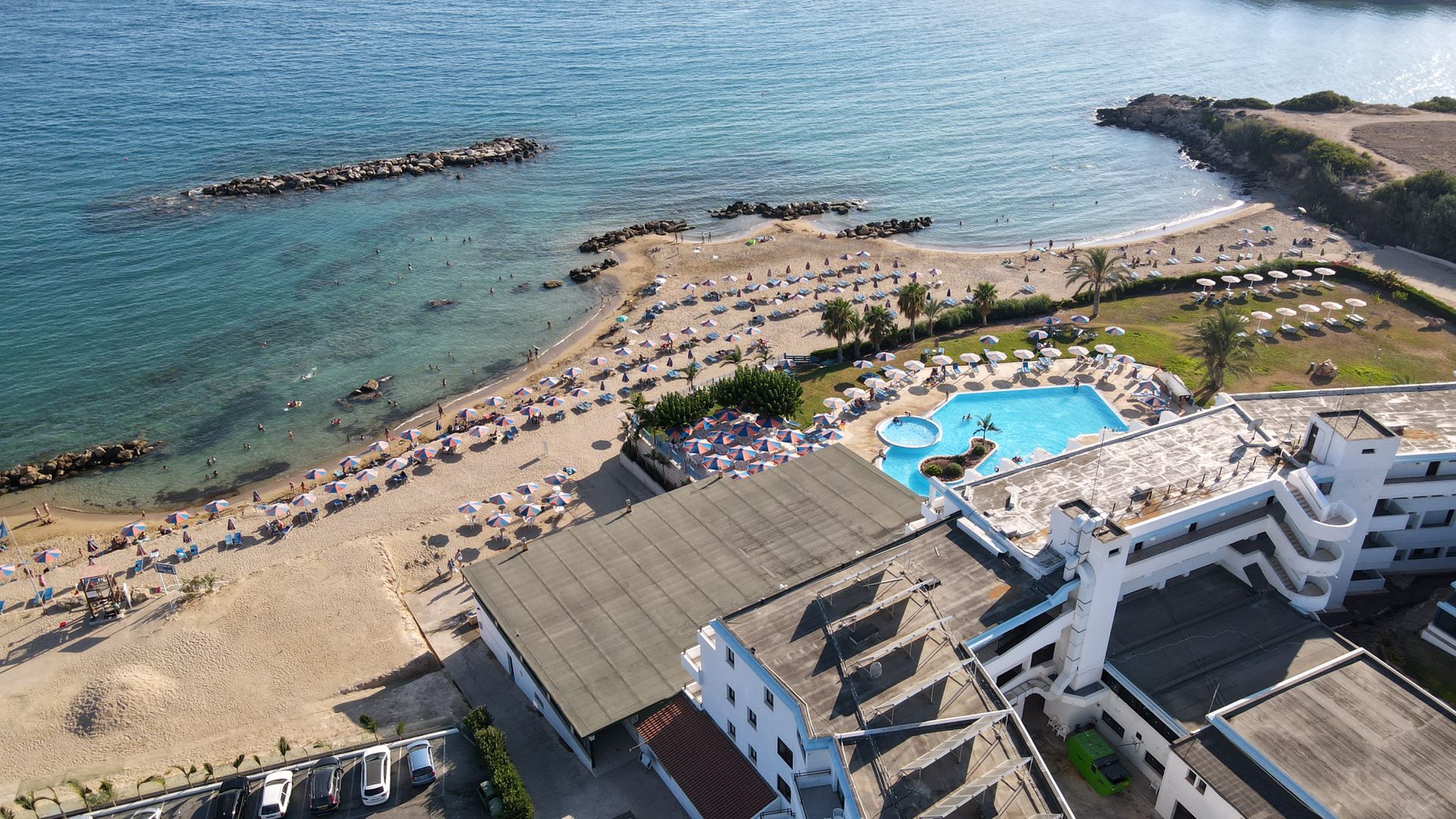
Geography splits the district as well. The coastal band through Kato Paphos and Chloraka is dense, salt-exposed and close to the contractor base. Peyia and Tala sit on hillsides where access, not electrical design, governs what reaches the plot. Polis Chrysochous is far enough from the main contractor concentration that travel time is written into most quoted day rates, and it is where genuinely off-grid properties appear — a separate system class on a different price basis.
Three-phase supply is more common in Paphos villas than in the island's apartment stock, which matters because phase balancing and export limitation are engineering decisions taken before procurement, not settings adjusted after.
What it costs here
Storage is priced per kWh of usable capacity, full PV installation per installed kWp, and standalone electrical work — a board replacement, a sub-board for backed-up circuits, remedial work found on inspection — by the hour.
The three levels above are national, and none of the published sources behind them breaks down by district — so this guide sets no Paphos figure against them. The district's own effect is on where in a range a quote lands: long private driveways on gradient, and coastal fixings that are standard here rather than an upgrade. Where a property has no network connection at all — a handful of plots inland from Polis Chrysochous — the relevant band is standalone off-grid work at roughly €1,696 to €3,074 per kWp, because the system carries its own generation, storage and charge control with no grid behind it.
What moves a hybrid quote up its range, in rough order of frequency:
Whether backup is whole-house or essential-loads only
A hybrid inverter that keeps the whole consumer unit alive during an outage needs an automatic transfer arrangement rated for the full house load. An essential-loads design needs a second sub-board and every backed-up circuit rewired into it. The second is cheaper in equipment and more expensive in labour, and the two are rarely priced the same way.
Usable versus nominal battery capacity
Quotes that state nominal kWh without depth-of-discharge look larger than they are. Comparison is only meaningful on usable capacity, at a stated continuous discharge rate.
Single-phase or three-phase
Three-phase hybrids cost more per kW and add design time for phase allocation and export limitation. On a villa with three-phase supply, a single-phase hybrid will back up one phase and leave the other two dark.
Where the battery can physically go
Temperature limits rule out unventilated garages and unshaded external walls. Moving the battery to a cooler position adds cable and labour.
The connection and metering sequence
The connection application is submitted by the installer, not the owner, and it goes in before commissioning rather than after. Around 45 days is the typical processing time, and where local network capacity is constrained a load assessment lengthens that further. An array sitting complete but unenergised on a Paphos roof while paperwork catches up is a common and avoidable outcome. Owners adding storage to an already connected array should ask whether the change alters the registered system configuration — that answer depends on inverter capacity and export behaviour, and it comes from the network operator rather than the contractor's sales sheet.
Local conditions that change the job
Salt is the first. Direct coastal exposure through Kato Paphos means salt-laden air, and marine-grade or hot-dip galvanised fixings are standard specification there rather than an upgrade. The same air reaches inverter enclosures, cable glands and earthing clamps, so an externally mounted hybrid on a seafront property needs a genuinely sealed enclosure and an inspection interval to match. Indoors, in a ventilated plant space, is the better answer wherever the cable run allows it.
Heat is the second, and it is the one that quietly costs output. Inverters derate at high ambient temperature and lithium batteries throttle charge and discharge rates outside their temperature window. An inverter and a battery cabinet mounted together on a west-facing garage wall in a Paphos August are both at the edge of their envelope in the same hour the array produces most. Ventilation and shading of the equipment position deserve more attention in a Paphos quote than the panel datasheet does.
Access is the third. On the hillside plots around Peyia, steep approach roads limit crane and delivery vehicle size, and a floor-standing battery cabinet is a two-person carry at best. A site survey before quotation is not a formality on that side of the district.
Distance is the fourth. Around Polis Chrysochous, travel time from the Paphos contractor base is built into day rates and it also sets the realistic response time for a fault call. For a household relying on stored energy through an outage, callout distance is part of the specification.
Companies covering the area
Registered storage and inverter contractors, Paphos
No companies listed here yet.
Companies are listed with their registrations, the services they record and how long they have been trading. Nothing is ordered by payment, and no star ratings or customer reviews are collected or displayed — the ordering rests on what a document can prove. The battery storage service pages and the Paphos district pages carry the fuller list, and the areas index covers contractors who work beyond the district boundary.
Two credentials are worth confirming before signing. The person doing the work should be a certified electrician for the installation class involved, and on a three-phase or commercial hybrid the design should be signed by an engineer registered with ETEK. A contractor who is vague about who signs has answered the question already.
Common questions
What size battery suits a Paphos villa?
No size follows from the house. It follows from the evening and overnight load the household actually draws, measured rather than estimated, and from how many days a year the property is occupied. A contractor who proposes a capacity before seeing consumption data is proposing a product, not a design.
Can a hybrid inverter be added to an existing array?
Usually, but the existing inverter, string configuration and connection arrangement constrain what is possible. AC-coupled storage leaves the existing DC side alone and costs more in equipment; DC-coupled retrofit means replacing the inverter. The quote should say which one it is.
Will the system keep the house running during a power cut?
Only if it was designed to. A grid-tied inverter without backup capability disconnects during an outage by design. Backup requires a hybrid with a dedicated backup output plus the transfer arrangement and, in most cases, a separate sub-board. That work is where the cost sits, not in the inverter badge.
What should a Paphos hybrid quote contain?
Usable battery capacity in kWh at a stated discharge rate; the inverter model, phase configuration and whether it has a backup output; the proposed equipment position with its ventilation and shading; the backed-up circuit schedule if backup is included; the fixings specification for a coastal site; a separated figure for electrical labour; and the name of the certified electrician and, where relevant, the ETEK-registered engineer signing the design.
Is storage worth fitting on a holiday property?
Rarely on the arithmetic alone. With low occupancy there is little self-consumption to shift, and the value of stored energy falls with it. Where it can make sense is a property with an unreliable supply, or one running pool and irrigation plant year-round whether or not anyone is in residence.
Sources
- Electricity Authority of Cyprus — connection and metering — retrieved 2026-07-24
- Cyprus Energy Regulatory Authority — net metering framework — retrieved 2026-07-24
- Cyprus Scientific and Technical Chamber (ETEK) — registered engineers — retrieved 2026-07-24
Where to go next
Companies, districts and the rest of the guides on this subject.

Thinking of doing this?Get up to five quotes, free.
Describe the installation and we will gather quotes from suppliers who specify before they price.