Commercial solar
Commercial solar systems in Cyprus, and the questions that come up most
What a commercial rooftop PV system costs per kWp in Cyprus, how the EAC connection shapes the design, and the ten questions businesses ask most.
7 min read
Christos covers electrical work, battery storage and the off-grid and commercial systems that sit on top of them. He tracks EAC grid connection requirements and export limits, which constrain more Cypriot installations than roof area ever does.
Published
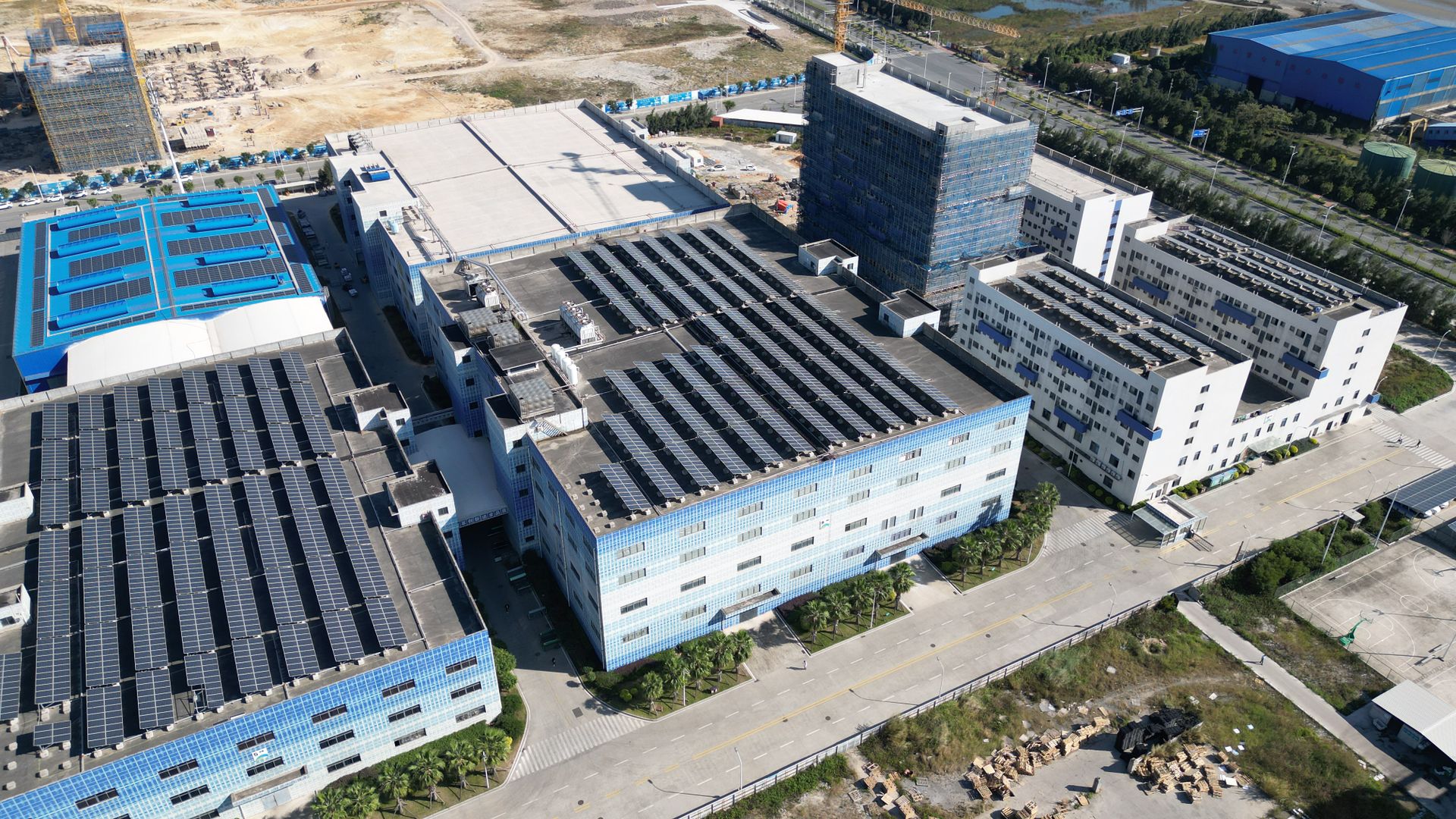
A commercial rooftop array in Cyprus is priced per installed kWp, and in the 50 to 250 kWp band the published range runs from about €700 to €1,050 per kWp. Nearly every other question a business asks resolves into three variables: what the connection will allow, how much generation the site consumes while the sun is on the roof, and who is qualified to sign the design.
The ten questions that come up most
- How large a system does the site actually need?
- What does it cost per installed kWp, and what is inside that figure?
- How long does the Electricity Authority of Cyprus connection process take?
- Will the system be permitted to export, and at what limit?
- One large inverter, or several smaller ones?
- Does storage pay on a commercial tariff?
- Who has to sign the design, and what registration do they hold?
- What does the roof have to carry, structurally and in terms of waterproofing?
- How much output is lost to summer heat and to dust?
- What maintenance does the array need after year one, and who performs it?
Short answers
Size the array on the daytime load, not the annual bill. A cold store, a hotel laundry and a packing shed with a chilled room absorb most of what a roof produces; a warehouse with three staff and no process load does not. Twelve months of interval data from the meter is the input. Annual kWh alone will size a system that exports more than it offsets.
Installed cost sits between about €700 and €1,050 per kWp for a three-phase commercial rooftop in the 50 to 250 kWp band. Agricultural installations, including pumping loads, are published higher, at roughly €750 to €1,200 per kWp, because the balance of system is more dispersed and the connection is often further from the array.
The connection application typically runs to around 45 days. It is submitted by the installer before commissioning, and a design change after submission can return it to the back of the queue.
Export permission is decided by the network, not by the contractor. Where the local feeder is constrained, a load assessment is added to the process. In dense tourist-area networks such as Germasogeia that is common enough to be programmed for rather than treated as bad luck.
Multiple inverters beat one large unit on most Cypriot commercial roofs, because roof planes rarely share an orientation and a single failure taking out the whole array is a poor outcome where PV offsets a process load.
Storage is priced per kWh of capacity, around €480 to €850 installed. On a commercial site it earns its keep against evening load, demand charges or an export cap — not against the array itself.
A registered engineer signs anything at commercial scale. ETEK registration is the credential to confirm, and it belongs to a named individual rather than to a company logo.
Roof capacity is two separate questions. The structure has to take dead load plus wind uplift; the waterproofing has to survive several hundred penetrations, or a ballasted system that changes how a flat roof drains.
Heat and dust are the two recurring output losses. Modules derate with cell temperature, which peaks precisely when irradiance does, and Saharan dust episodes coat an array across a district in hours.
Maintenance is a contract, not an intention. Cleaning, inverter servicing, string-level monitoring and a stated response time for a fault.
Where the answer depends
Three site conditions move every answer above, and all three are worth establishing before an installer is asked to price anything.
The connection. Three-phase capacity, the maximum demand already recorded at the meter, and the state of the local feeder decide the ceiling on the project — roof area does not. Where the approval caps export, that cap is enforced by an export limit configured at the inverter, and the setting belongs in the commissioning record. It is the number most often lost after a firmware update.
The load profile. Self-consumption is what turns generation into money on a commercial tariff, and the gap between a site consuming most of its own output and one exporting most of it is larger than any difference between module brands. Seasonal businesses invert the problem: a hotel in the eastern resorts runs its heaviest load in exactly the months the array performs best, while a business that shuts for August has the opposite.
The roof itself. Age, membrane type, remaining warranty and structural capacity. Mounting into a flat roof with years left in it is a different project from mounting into one that needs recovering first, and discovering the second halfway through installation is expensive. A structural appraisal ahead of tender costs little relative to what it prevents.
Two conditions apply to specific sites. Coastal industrial premises sit in the same marine atmosphere as the housing around them, so rails, earthing clamps and enclosure glands should be marine-grade or hot-dip galvanised. Agricultural sites across the Nicosia plain usually have the pump as the dominant load and the array a long cable run from it, which changes the voltage-drop calculation.
What nobody asks but should
Who holds the monitoring account? Portals registered to the installer's own email address are the most common defect at handover on commercial work. The account should be in the operating company's name from day one.
What is the export limit set to, and where is that written? If the answer lives only in an engineer's memory, it will be wrong within two years.
How does the performance warranty differ from the product warranty? Modules carry both, on different durations; inverters usually carry only the second. Whether the manufacturer honours either directly or only through the installing company matters more than the headline year count.
What is the response time when a string drops out? A commercial array losing one string of twenty loses five per cent of output and raises no alarm anyone notices. String-level monitoring with a contracted response time is the difference between a two-week fault and a two-year one.
Who is responsible for the roof afterwards? Where the roofing contractor's warranty and the PV contractor's warranty meet is where leaks get disputed. Settled before installation, or not at all.
What happens on the day the meter changes? Commissioning is not complete until the metering arrangement is in place, and on a trading site that is a planned interruption. Sites that skip the discussion get an unplanned one.
Commercial PV contractors
8 companies shown here.
- 1
KHALIL ABUSHALHA
Larnaca Centre, Larnaca
KHALIL ABUSHALHA is listed on the Cyprus Energy Service register of certified solar PV installers under registration ΕΦΒ/305/2024, valid to 2030-01-12. The entry covers ΛΑΡΝΑΚΑ, the larnaca district. Details come from the public register and have not been verified with the business.
MARK STUART DAVIES
Paphos Centre, Paphos
MARK STUART DAVIES is listed on the Cyprus Energy Service register of certified solar PV installers under registration ΕΦΒ/71/2020. That registration ran to 2026-02-27 and is not current in the register we hold. The entry covers ΠΑΦΟΣ, the paphos district. Details come from the public register and have not been verified with the business.
- 1
MOUSSA FAHER
Lakatamia, Nicosia
MOUSSA FAHER is listed on the Cyprus Energy Service register of certified solar PV installers under registration ΕΦΒ/424/2026, valid to 2032-03-04. The entry covers ΛΑΚΑΤΑΜΙΑ, the nicosia district. Details come from the public register and have not been verified with the business.
- 1
PATRICK MICHAEL MC CLUSKEY
Strovolos, Nicosia
PATRICK MICHAEL MC CLUSKEY is listed on the Cyprus Energy Service register of certified solar PV installers under registration ΕΦΒ/338/2024, valid to 2030-06-21. The entry covers ΣΤΡΟΒΟΛΟΣ, the nicosia district. Details come from the public register and have not been verified with the business.
STEVEN RUSH
Paralimni, Famagusta
STEVEN RUSH is listed on the Cyprus Energy Service register of certified solar PV installers under registration ΕΦΒ/64/2020. That registration ran to 2025-12-17 and is not current in the register we hold. The entry covers ΠΑΡΑΛΙΜΝΙ, the famagusta district. Details come from the public register and have not been verified with the business.
ΑΓΓΕΛΑ ΑΝΔΡΕΟΥ
Nicosia Centre, Nicosia
ΑΓΓΕΛΑ ΑΝΔΡΕΟΥ is listed on the Cyprus Energy Service register of certified solar PV installers under registration ΕΦΒ/68/2020. That registration ran to 2026-01-28 and is not current in the register we hold. The entry covers ΛΕΥΚΩΣΙΑ, the nicosia district. Details come from the public register and have not been verified with the business.
- 1
ΑΓΓΕΛΟΣ ΑΓΓΕΛΗ
Kokkinotrimithia, Nicosia
ΑΓΓΕΛΟΣ ΑΓΓΕΛΗ is listed on the Cyprus Energy Service register of certified solar PV installers under registration ΕΦΒ/217/2022, valid to 2028-12-22. The entry covers ΜΑΜΜΑΡΙ, the nicosia district. Details come from the public register and have not been verified with the business.
ΑΓΓΕΛΟΣ ΜΗΛΙΑΤΗΣ
Limassol Centre, Limassol
ΑΓΓΕΛΟΣ ΜΗΛΙΑΤΗΣ is listed on the Cyprus Energy Service register of certified solar PV installers under registration ΕΦΒ/87/2020. That registration ran to 2026-07-08 and is not current in the register we hold. The entry covers ΛΕΜΕΣΟΣ, the limassol district. Details come from the public register and have not been verified with the business.
Contractors are listed with their registrations and the services they record. No ratings or testimonials are collected or displayed anywhere on this site — the ordering rests on what a document can prove. The commercial solar section, the services index and the district pages carry the fuller list.
Common questions
Does a commercial system need planning permission as well as a connection approval?
The connection application to the Electricity Authority of Cyprus is always engaged. Whether anything further applies depends on the structure: panels flush to an existing industrial roof are treated differently from a raised canopy or a ground-mounted array. The contractor should state in writing, before contract, which applications apply to that specific property.
Can a commercial array be sized larger than the site's own consumption?
Physically yes; commercially it depends on what the connection approval permits for export and on what export is worth under the current framework. That is a regulated position rather than a contractor's opinion, and the terms should be confirmed with the regulator and the network operator before the array is sized above the daytime baseline.
Is a battery necessary to make a commercial system work?
No. Storage addresses evening load, an export cap or a demand-charge structure. Where a site consumes most of its generation during daylight, storage adds cost against a small remaining benefit. Where an export limit is imposed, it recovers generation that would otherwise be curtailed.
What should a commercial quote contain before it can be compared?
Module and inverter makes and model numbers, the modelled annual yield with its shading and derating assumptions stated, the mounting system and its fixings specification, the structural appraisal or a reference to one, the export limit assumed, who submits the connection application, the commissioning tests to be performed, and the maintenance scope with a response time.
Sources
- Electricity Authority of Cyprus — connection and metering — retrieved 2026-07-28
- Cyprus Energy Regulatory Authority — net metering and export framework — retrieved 2026-07-28
- Cyprus Scientific and Technical Chamber (ETEK) — registered engineers — retrieved 2026-07-28
- Ministry of Energy, Commerce and Industry — energy support schemes — retrieved 2026-07-28
01More on this topic
Same cluster.Different question.

Where to go next
Companies, districts and the rest of the guides on this subject.

Thinking of doing this?Get up to five quotes, free.
Describe the installation and we will gather quotes from suppliers who specify before they price.