Commercial solar
Cyprus Commercial Roof Solar: Survey the Whole Interface
Prepare a commercial rooftop-solar brief in Cyprus with structural assessment, roof condition, equipment loads and maintenance-access interfaces.
6 min read

These articles were prepared with Codex using the public sources linked in each guide. Worked examples are illustrative. This byline does not claim a human professional qualification, a site inspection or independent expert review.
Published · Updated
A Cyprus commercial rooftop-solar proposal needs a coordinated survey of the building, roof assembly and proposed equipment interfaces. An area layout can show where panels might fit without establishing structural suitability, weatherproofing or maintainability. The procurement brief should assign the professional assessments and preserve their findings before the layout is treated as installable.
This 2026 technical guide describes survey scope and evidence. It gives no permissible load, wind value, fixing detail or electrical procedure. Those decisions require the actual building, selected system and appropriately qualified professionals.
Establish the roof's documented construction
Collect available drawings, repair records and product information. Ask the assessment team which documents can be relied on and which need verification against the actual roof.
A building may have changed since an original drawing. The survey should record that limitation rather than present an old document as the completed current arrangement.
Keep unknown construction visible. The absence of a record is a reason for an appropriate investigation, not permission to assume a convenient substrate or support condition.
Separate usable area from structural suitability
The proposed panel footprint is one input. The relevant professional must assess the actual structure and loads through the applicable method.
The US Department of Energy's install-and-commission guidance includes structural and site-related design considerations. That primary background supports asking for those assessments; it does not approve a Cyprus roof.
This article supplies no universal roof capacity or structural calculation. An owner should not infer suitability from the absence of visible damage or from another building using a similar system.
Map the proposed equipment and retained services
The roof record should identify existing equipment, outlets and routes relevant to the installation. Ask how the proposed array interacts with them.
The design should distinguish objects that remain from items needing relocation. A plan that removes an obstruction graphically should not imply that its actual service and responsibility have been resolved.
A proposed editorial interface map has four groups: mounting, roof-water management, retained equipment and maintenance access. These four groups are an organisational example, not an exhaustive engineering survey standard.
Coordinate mounting with the roof assembly
Ask the relevant professionals to explain how the selected mounting arrangement relates to the actual roof construction and covering. The design record should identify the applicable product and interface basis.
A mounting-system brochure cannot settle compatibility with every existing membrane or retained detail. The team should assess the complete connection, including any relevant effect on roof terms and maintenance.
The DOE Solar Ready Buildings Planning Guide discusses mounting, flashing and roof-warranty questions during planning. It is technical context from the United States, not a Cyprus statutory requirement or a fixing instruction for the site.
Treat drainage as a retained function
The proposed installation should be assessed against the actual water-management arrangement. Outlets and inspection points need to remain part of the coordinated roof record.
Do not assume that a large area between panels establishes an appropriate drainage or maintenance detail. The relevant designer should assess the interface rather than rely on an owner's visual judgement.
Where roof work is required before mounting, identify its scope and acceptance. The solar installer needs to know the condition handed over, while the roofing party needs the proposed equipment and interface information.
Include site conditions in professional assessment
The design should address the relevant exposure and other site conditions through the applicable professional method. A generic detail should not be treated as evidence for the actual building.
This guide gives no Cyprus-wide wind design number or coastal fixing grade. The competent team should identify the appropriate basis and selected product limitations.
Keep the findings connected to the approved layout and equipment. If the layout or mounting changes, ask which assessment needs review rather than assume the original conclusion covers every revision.
Define relocation responsibilities
If equipment must move, identify who assesses, isolates, relocates and verifies it. Roof work and electrical or other specialist services can sit in different appointments.
A contractor's instruction to “move existing unit” is insufficient if it leaves the service owner and technical responsibility unidentified. Obtain the relevant coordination before work.
The property operator should also understand any interruption and recovery requirement. The installation schedule must not become authority to bypass verification of a retained or relocated service.
Specify appropriate access for later work
The design should consider maintenance of both the solar system and the roof. Ask who establishes the relevant access arrangement and which records the owner receives.
The owner should not design or use an improvised roof-access method. The actual risk and work requirements need competent assessment.
If panels obstruct a future roofing task, the handover should identify the coordination route. Removal, electrical isolation and reinstatement need appropriate parties rather than an assumption that any roofer can move the equipment.
Preserve evidence before interfaces are concealed
Ask which locations will be documented during work and what inspections or tests are specified by the responsible professionals. The record should show the actual installation, not merely the intended drawing.
A located photograph can support traceability but cannot certify every concealed requirement. Keep the professional result separate from the image and explain its limitations.
A proposed editorial evidence register distinguishes three statuses: assessed before work, verified during work and unresolved. These are three organisational labels, not a technical acceptance standard. They help prevent an outstanding interface from disappearing within a general completion note.
Keep authority and connection matters distinct
The relevant Cyprus professional should assess planning and building questions for the actual installation and associated alterations. Owner or management authority needs its own record.
A suitable roof assessment does not establish electrical connection approval. The project must identify the applicable connection route and responsible party separately.
The tender should make those dependencies visible. This guide asserts no current grant entitlement, export value or blanket permission exemption. The actual confirmed terms belong with the design and commercial file.
Reconcile the final survey and installed record
The completed drawings should identify the equipment and interfaces actually installed. An approved substitution or changed route needs to appear in the relevant record.
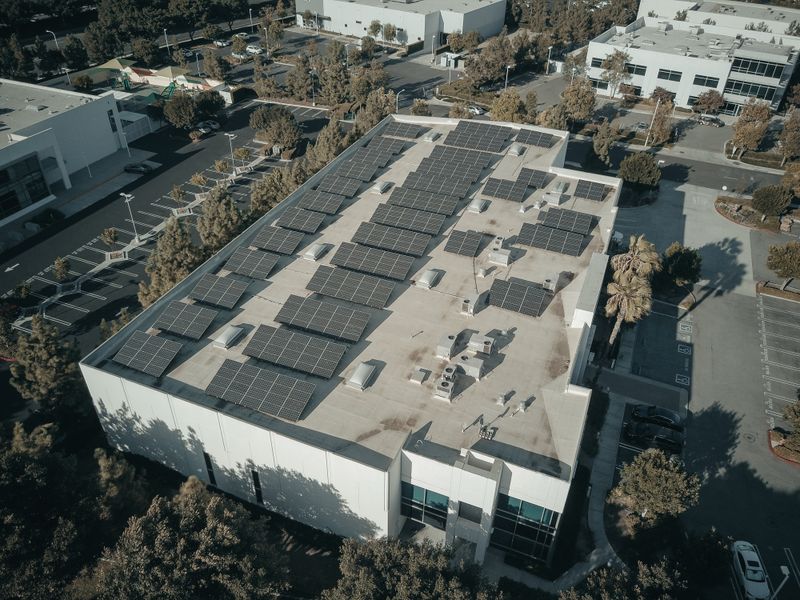
Retain the roof assessment, repair handover and applicable product information with the solar documentation. Future contractors should not have to reconstruct the interface from a distant aerial image.
If an issue remains, identify the responsible party and consequence. A system producing electricity should not be described as resolving every roof condition on the basis that generation has started.
Common questions
Is an unobstructed roof enough for commercial solar?
Area is one condition. Structure, roof assembly, interfaces, access and connection arrangements still need assessment.
Can a generic mounting detail approve the site?
The selected arrangement must be assessed against the actual building and applicable requirements. This guide supplies no universal fixing solution.
Does a product warranty establish watertightness?
Read its actual scope and conditions. Interface design, installation evidence and retained roof responsibilities need separate attention.
What if existing equipment blocks the proposed layout?
Identify the competent assessment and relocation scope. A drawing change should not silently commit another service to alteration.
What makes the roof survey usable later?
Located findings, clear limitations, identified professional responsibilities and a final record tied to the installed equipment. Those documents preserve the evidence behind the procurement decision.
Sources
- US Department of Energy — install and commission PV — retrieved 2026-10-10
- US Department of Energy / NREL — Solar Ready Buildings Planning Guide — retrieved 2026-10-10
- Cyprus government — building permission — retrieved 2026-10-10
01More on this topic
Same cluster.Different question.
 6 min read
Cyprus Commercial PV: Model Export and Curtailment Risk
Assess a Cyprus commercial solar proposal with separate on-site use, export treatment, control limits and transparent sensitivity cases.
- 7 min read
Cyprus Commercial Solar: Interval Loads Before Array Size
Use interval consumption and operating schedules to assess a Cyprus commercial solar array before comparing annual generation totals.
- 6 min read
Cyprus Solar Inverters: Distinguish DC, AC and Limits
Read commercial Cyprus solar offers with separate array DC capacity, inverter AC output, export limits and explicitly defined operating modes.
Where to go next
Companies, districts and the rest of the guides on this subject.

Thinking of doing this?Get up to five quotes, free.
Describe the installation and we will gather quotes from suppliers who specify before they price.